KEY TAKEAWAY
Whole-house describes the area served. The selected filters, softening and other treatment functions must be specified individually.
Define what whole-house means at your property
An inlet system serves the water line and outlets included in its installation. Before choosing equipment, identify the route through the tank, pump and building plumbing. A drawing or labelled photograph can clarify where treatment is proposed.
List the problems and the outlets affected. Suspended particles, taste concerns, scale and a drinking-water requirement may need different equipment. Treating the complete property does not mean that every possible treatment function is included.
Match the stages to a documented purpose
Cartridge and media stages are selected for their filtration task. A softener addresses measured hardness; a kitchen RO purifier serves a different point of use. Any UV stage has its own water-quality and operating requirements.
Ask the proposal to name each stage and explain why it is included. Avoid comparing systems only by housing colour, stage count or an unqualified statement that a filter removes everything.
Size for simultaneous use
Peak use matters more than the number of people alone. Identify showers, taps and appliances that may operate together, then provide the pipe size and available pressure. Include any restrictions or performance concerns in the existing installation.
The review should also cover service access and any drain, power or backwash requirements for the selected equipment. A compact footprint is not helpful if cartridges or valves cannot be reached for maintenance.
Understand the practical benefits and limits
A correctly selected inlet filter can address its stated treatment task across the connected outlets. Centralised equipment can also make inspection and servicing easier to organise than several unrelated filters.
The actual result depends on the water, equipment specification and upkeep. Filtration does not replace tank and plumbing maintenance, and a sediment or carbon stage should not be described as a hardness-removal system without appropriate evidence.
Compare cost using an itemised proposal
Aqua Best provides current prices by quotation. Ask for equipment, fittings, bypass or isolation arrangements, installation, commissioning and maintenance to be identified. Review the replacement cartridges or media and the service tasks alongside the purchase.
- Water source and available analysis.
- Bathrooms and outlets used together.
- Tank, pump, main-line and installation photographs.
- Pipe size, pressure and access constraints.
- Optional softening, UV or kitchen RO listed separately.
Example: an inlet filter and a separate kitchen requirement
A villa may need filtration on the incoming line while the household also wants a dedicated kitchen purifier. In that situation, compare two identified duties: the stated task at the inlet and the requirement at the drinking-water outlet. Neither label should be used as a promise that the complete property has every possible treatment function.
Ask the proposal to identify the connection position, flow basis and care for each system. If measured hardness is also an issue, request a separate softening assessment. This produces a clearer quotation than asking for the largest available package without describing the water route.
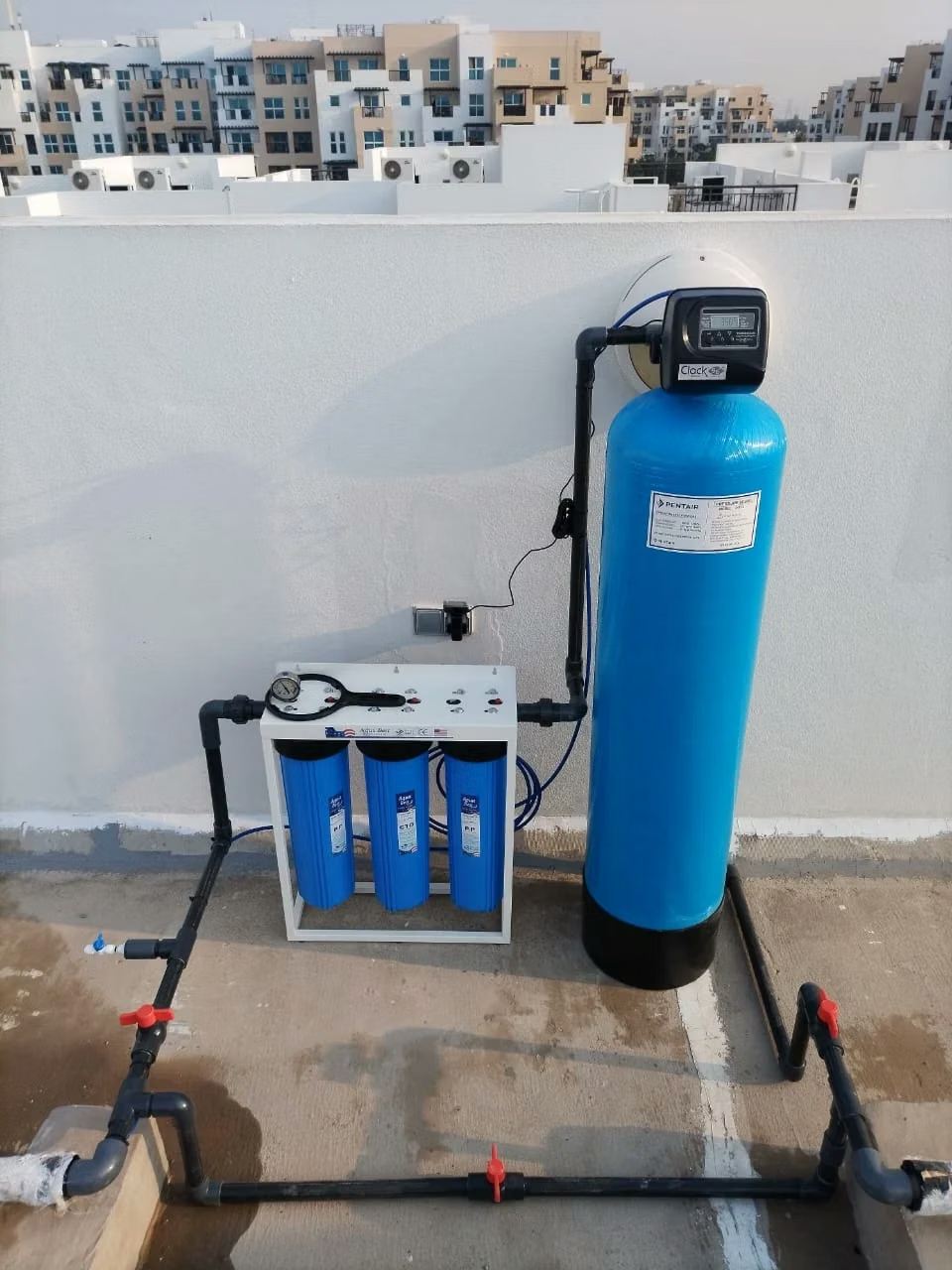
Use a completed installation as context
Project photographs can help you discuss space and layout, but another villa’s equipment is not a sizing rule for yours. Use them to ask practical questions about access, the flow path and maintenance.
Send the property information with your enquiry so the team can review an appropriate arrangement and confirm the installed scope.