Simplex Water Softeners in Dubai, UAE
Review the equipment and the scope for your enquiry.
View details: Simplex Water Softeners in Dubai, UAE
Maintenance guide
Record what the softener is doing and what has changed. Salt use, controller information and measured hardness help a technician assess the installed system.
Quotation only. Equipment and work confirmed in your proposal.
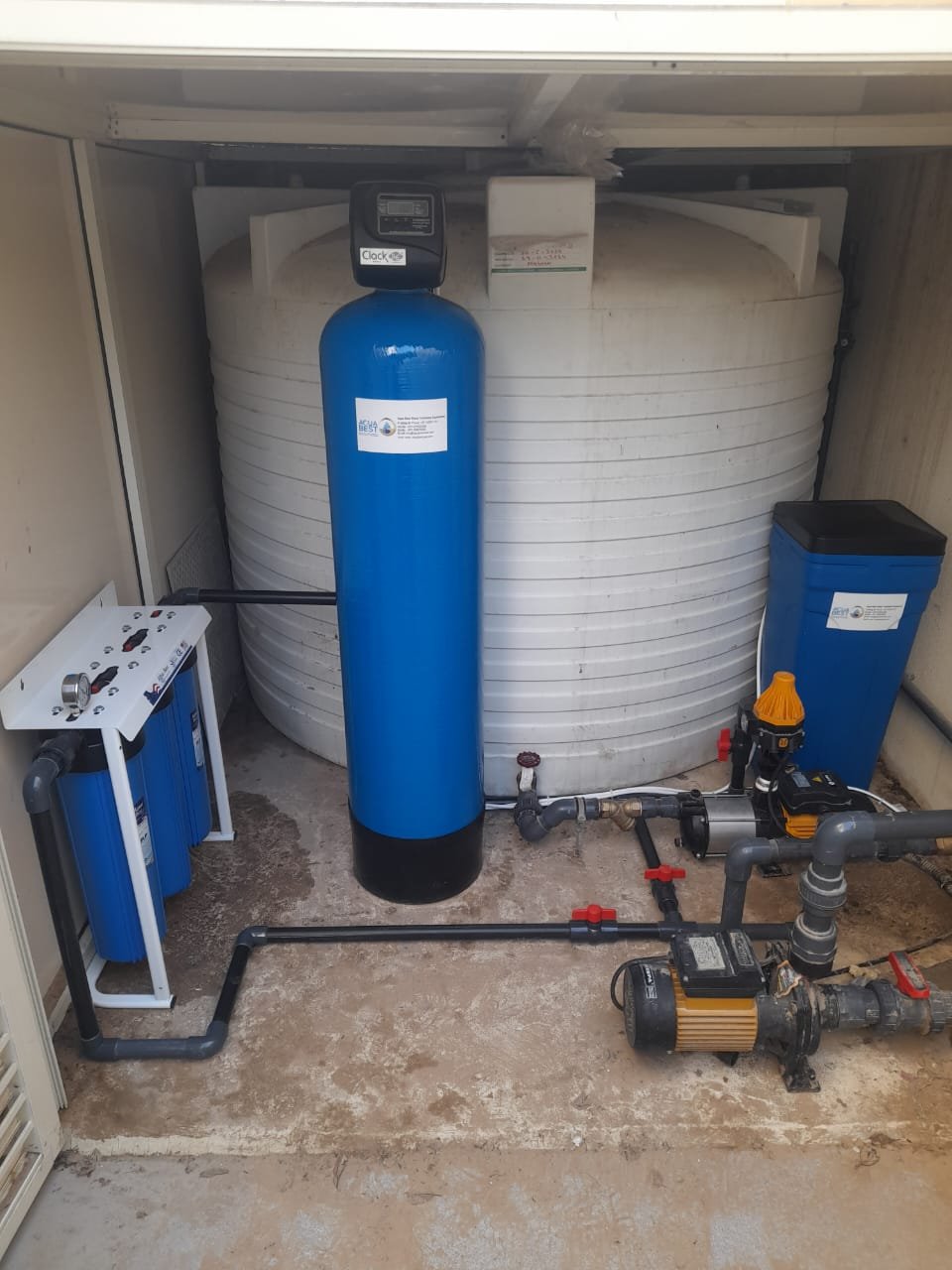
Photograph the valve/controller label, vessel and brine tank from an accessible position. Record the last service date and any changes to the supply, occupancy or water use. If the controller displays a message, photograph it rather than repeatedly clearing it.
Tell us whether the concern is scale, an unusual change in salt consumption, a leak, a continuous discharge or a controller warning. These observations help define the inspection; they do not establish which part has failed.
A softener enquiry should identify hardness, not just total dissolved solids. TDS describes dissolved material overall and is not a direct measurement of the calcium and magnesium hardness that a softener is intended to address. If you have a recent hardness result, include its units and whether the sample was taken before or after treatment.
If no result is available, say so. Ask how testing will be arranged as part of assessing the installation rather than inferring a hardness value from the community name.
Use the salt type and operating instructions for the actual model. Pentair publishes model-specific guidance on salt and softener upkeep; those instructions should not be treated as identical for every valve or resin system.
From a safe position, note whether the salt level is visibly low and when salt was last added. Do not force a regeneration, dismantle a valve, break up deposits with sharp tools or alter the programmed hardness using a generic setting.
| Information | Why it helps |
|---|---|
| Valve and vessel model | Identifies the installed configuration and possible parts |
| Salt type and refill history | Documents the consumable currently used |
| Hardness result and sampling point | Helps distinguish supply conditions from treatment performance |
| Controller message and time shown | Records the operating state for inspection |
Softener visits, salt, resin, media, valves and repairs should be listed in the site-specific quotation. The four-visit domestic RO AMC does not automatically cover a softener. Ask which checks, consumables and work are included and what is charged separately.
TDS alone does not establish hardness removal. Share a hardness result and its sampling location if available.
Not automatically. Softener consumables and service arrangements must be stated separately in the site-specific quotation.
Review the equipment and the scope for your enquiry.
View details: Simplex Water Softeners in Dubai, UAEReview the equipment and the scope for your enquiry.
View details: Water Softener Installation in DubaiReview the equipment and the scope for your enquiry.
View details: Water Filter AMC and Annual Maintenance in the UAEConsult the instructions for your exact model. The following sources support the general guidance on this page.
Send your location, equipment details and the work required. Our team will review the scope for a quotation.